


Why Does Bad Breath Come Back After Brushing? 7 Causes to Check
You brush your teeth.
You floss.
Maybe you clean your tongue and finish with mouthwash.
For a little while, your mouth feels clean and your breath seems fine.
Then a few hours later, the same problem returns.
If that sounds familiar, the obvious reaction is to assume you need to brush more, use a stronger mouthwash, or buy another product.
But recurring bad breath does not necessarily mean you are failing to clean your teeth properly.
Sometimes brushing improves the smell temporarily while leaving the real source of the problem untouched.
That distinction matters.
Bad breath—also called halitosis—can have several causes, and most persistent cases originate somewhere in the mouth rather than from a mysterious problem in the stomach. A systematic review found that intra-oral factors account for the majority of cases, with tongue coating, periodontal disease, and oral hygiene factors among the major contributors.
So instead of asking:
“What stronger product should I try next?”
a better question is:
“Why is the odor coming back?”
Let's work through the possibilities.
Why Brushing Can Make Your Breath Better Temporarily
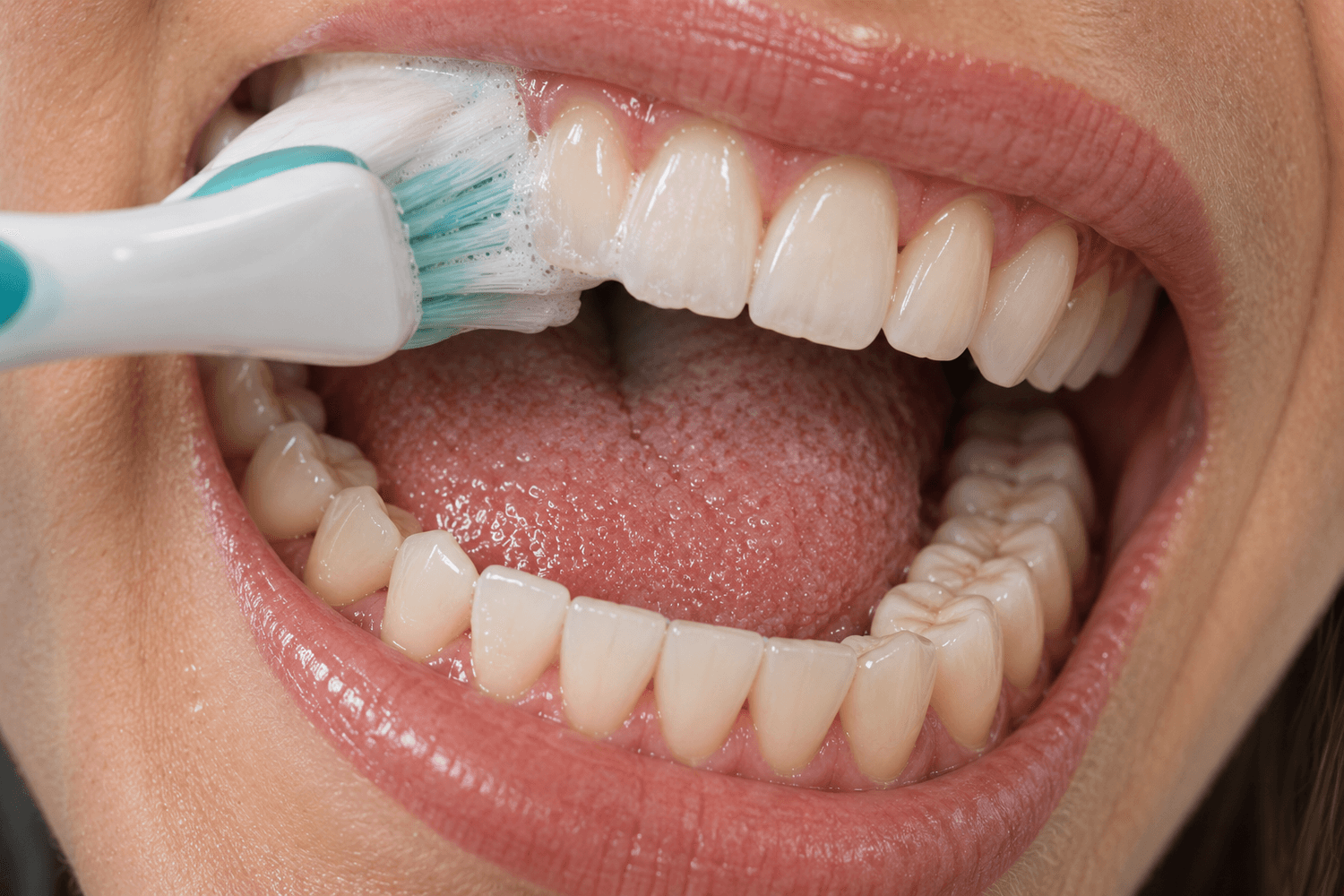
Brushing is important. It removes plaque and food debris from accessible tooth surfaces and is a fundamental part of oral health.
But your toothbrush does not address every possible source of bad breath.
Think of a common situation.
You wake up with unpleasant breath. You brush your teeth thoroughly and feel much better. By lunchtime, however, you notice the same stale taste or odor again.
That does not necessarily mean brushing “failed.”
It may simply mean brushing removed part of what was contributing to the odor, while another factor remained.
Mechanical cleaning vs the underlying cause
Much of oral bad breath is associated with bacterial breakdown of organic material, which can produce volatile sulfur compounds and other odor-producing substances. Those processes can occur on the tongue, around the gums, between teeth, and in other areas that a toothbrush alone may not fully address.
Brushing the visible surfaces of your teeth can therefore improve the overall environment without necessarily resolving:
tongue coating
material trapped between teeth
dry mouth
gum inflammation
another oral condition
This is one reason a good oral-care routine involves more than brushing alone.
Freshness isn't the same as solving the problem
A minty taste can also create the impression that the problem has disappeared.
That is especially relevant with some mouth rinses.
The American Dental Association notes that cosmetic mouthwashes may temporarily control or mask bad breath without addressing problems such as cavities or gum disease.
So if your mouth feels fresh for 30 minutes and the odor eventually returns, that does not tell you much about the actual cause.
Freshness is a sensation.
Finding the source is a diagnosis problem.
And those are not the same thing.Lorem ipsum dolor sit amet, consectetur adipisicing elit. Autem dolore, alias, numquam enim ab voluptate id quam harum ducimus cupiditate similique quisquam et deserunt, recusandae.
7 Reasons Bad Breath May Return After Brushing
1. Tongue coating
Your tongue is not a smooth surface.
Its texture can retain microorganisms, food debris, shed cells, and other material—particularly toward the back of the tongue.
Research repeatedly identifies tongue coating as an important source of intra-oral halitosis. One review describes it as a major reservoir associated with the production of volatile sulfur compounds.
This creates a simple possibility:
You may be cleaning your teeth effectively while leaving one of the biggest odor-producing surfaces relatively untouched.
That does not mean you should aggressively scrape your tongue.
The goal is gentle oral hygiene, not trying to sterilize your mouth. The NHS recommends gently cleaning the tongue once a day with a tongue scraper or cleaner as part of routine care.
If significant coating repeatedly returns, however, simply scraping harder may not answer the more useful question:
Why is it accumulating?
That can lead us to the next factor.
2. Plaque and debris between your teeth
Your toothbrush cannot clean every interdental space effectively.
Food debris and plaque can remain between teeth and around the gumline, providing another environment where odor-producing bacteria can thrive.
That's why oral-health guidance generally combines toothbrushing with cleaning between the teeth using floss or interdental cleaning methods.
If you brush twice daily but rarely clean between your teeth, your routine may be excellent on the surfaces your toothbrush reaches and incomplete everywhere else.
A useful question is therefore not just:
“How often do I brush?”
but:
“Am I actually cleaning all the relevant areas of my mouth?”
3. Dry mouth
This one is easy to underestimate.
Saliva does far more than make your mouth feel wet.
It helps wash food particles away, keeps oral tissues moist, and contributes to maintaining a healthy oral environment. When saliva production is reduced, bad breath can be one of the symptoms.
Dry mouth can be associated with several factors, including some medications and health conditions. The National Institute of Dental and Craniofacial Research specifically notes that hundreds of medications can reduce saliva production.
This helps explain a frustrating pattern:
You clean your mouth.
Your breath improves.
But if the mouth becomes dry again, the environment that contributed to the odor may return too.
Clues worth noticing include:
a sticky or unusually dry feeling
waking with a very dry mouth
frequent thirst
difficulty swallowing dry foods
dry or cracked lips
persistent mouth or throat dryness
Persistent dry mouth deserves attention rather than simply being covered with stronger mints or rinses.
We'll look much more closely at this in the next article.
4. Gum problems
Persistent bad breath can sometimes accompany gum disease.
The National Institute of Dental and Craniofacial Research lists persistent bad breath alongside symptoms such as red, swollen or tender gums, easy bleeding, receding gums, loose teeth and discomfort while chewing.
That does not mean everyone with bad breath has gum disease.
It means bad breath should not automatically be treated as a cosmetic issue when other signs are present.
Pay particular attention if the odor occurs alongside:
gums that bleed easily
persistent swelling
tenderness
gum recession
loose teeth
pain while chewing
This is an important point because buying another mint, rinse, toothpaste, or supplement could delay dealing with the actual dental problem.
5. Food, drink, smoking, or dietary patterns
Sometimes the explanation is more straightforward.
Strong-smelling foods and drinks can contribute to breath odor, and smoking is another established cause. Fasting and crash dieting can also be associated with bad breath.
The important distinction is between:
temporary food-related odor
and
persistent bad breath that continues regardless of what you eat.
If the problem appears predictably after a specific food and resolves, that is different from waking with the same odor every morning or experiencing it throughout the day despite normal hygiene.
Keeping a short record of when the problem appears can sometimes reveal patterns that constantly switching products will never show you.
6. Your mouthwash may be helping temporarily—not solving the cause
Mouthwash is not one single category.
Different products have different active ingredients and purposes.
Some therapeutic rinses may be recommended for specific oral-health needs. Cosmetic rinses, meanwhile, may mainly make the mouth smell or taste fresher temporarily.
This is why the question:
“Does mouthwash work?”
is too broad.
A better question is:
“What am I expecting this particular mouthwash to do?”
If your main issue is debris between the teeth, gum disease, substantial tongue coating, or dry mouth, a fresh-tasting rinse alone cannot logically correct all of those different problems.
If the odor keeps returning, repeatedly upgrading to “stronger” rinses may be treating the signal rather than identifying the source.
7. The cause may not be primarily inside the mouth
Most persistent halitosis originates from oral factors, but not all of it does.
A systematic review estimated that around 10–20% of halitosis may involve extra-oral factors. Potential associations can include ear, nose and throat conditions as well as some respiratory, gastrointestinal, metabolic or systemic conditions.
The practical lesson is not to assume that persistent bad breath must be coming from your stomach.
In fact, the evidence points in the opposite direction: oral causes are substantially more common.
The sensible sequence is usually:
Review your oral hygiene.
Look for obvious oral contributors.
Have persistent dental causes evaluated.
If your dentist finds no oral explanation, discuss other possibilities with an appropriate healthcare professional.
That is a much better process than trying to diagnose a gastrointestinal or systemic condition from breath odor alone.
What Should You Check First?
If your breath improves after brushing and then returns, resist the urge to change five things at once.
You learn very little that way.
Instead, work through the problem systematically.
Step 1: Check the basics
Ask yourself:
Am I brushing my teeth thoroughly twice a day?
Am I cleaning between my teeth daily?
Am I gently cleaning my tongue?
Am I keeping removable dental appliances clean, if applicable?
These are basic questions, but they are worth checking before looking for more complicated explanations.
Step 2: Notice when the problem occurs
Is the odor mainly:
first thing in the morning?
after long periods without eating or drinking?
after certain foods?
after coffee or alcohol?
throughout the entire day?
worse when your mouth feels dry?
Timing gives you clues.
Step 3: Check for dry-mouth signs
Ask:
Does my mouth actually feel moist throughout the day?
Dry mouth is easy to overlook when the main complaint is odor.
If dryness is persistent, especially if you take medication regularly, it is worth discussing with your dentist or doctor rather than assuming it is simply part of getting older. NIDCR specifically notes that persistent dry mouth is not considered a normal part of aging.
Step 4: Pay attention to your gums
Look beyond breath.
Are your gums frequently:
bleeding?
swollen?
painful?
receding?
Persistent bad breath combined with these symptoms deserves dental evaluation.
Step 5: Look at what you're trying to “fix” the problem with
Have you recently cycled through:
mouthwash → different toothpaste → stronger mouthwash → mints → another oral-care product?
That pattern can create the feeling that you are actively solving the problem while leaving the fundamental question unanswered.
Instead of product hopping, move back one step:
What evidence do I have about the cause?

That single question changes the entire approach.
When Professional Evaluation Matters
Bad breath occasionally happens to almost everyone.
Persistent bad breath is different.
The NHS advises seeing a dentist when bad breath does not improve after self-care for several weeks, or when it occurs with problems such as painful, bleeding or swollen gums, toothache, loose adult teeth or denture problems.
A dentist can examine areas you cannot properly evaluate yourself, including:
gum health
plaque and tartar accumulation
cavities
restorations
periodontal pockets
tongue and oral tissues
signs of dry mouth
If your mouth appears healthy and the odor remains unexplained, your dentist may recommend seeing another healthcare professional to investigate non-dental causes.
The important point is simple:
Persistent bad breath deserves investigation—not endless masking.
Build Your Next-Step Troubleshooting Plan
You do not need to solve every possible cause today.
You need to stop guessing.
Start with this simple sequence:
1. Confirm your basic oral-care routine.
Brush properly, clean between the teeth, and gently clean the tongue.
2. Observe rather than immediately buying something.
Notice timing, foods, dryness, tongue coating and gum symptoms.
3. Identify one likely contributor.
Don't change several variables simultaneously unless professionally advised.
4. Address obvious dental problems.
Persistent bleeding, swelling, pain or other dental symptoms should move professional evaluation higher on your list.
5. Pay special attention to dry mouth.
It is one of the most overlooked reasons that breath can improve after cleaning and then deteriorate again.
And that is the most useful place to go next.
The Key Shift: Stop Asking “What Else Should I Buy?”
Bad breath coming back after brushing does not automatically mean you need a stronger toothpaste, a stronger rinse, another supplement, or another mint.
Brushing may already be doing exactly what it is supposed to do.
The real issue may be that brushing is only addressing one part of the problem.
Once you move from:
“How do I cover the smell?”
to:
“What keeps allowing it to return?”
you can make much better decisions about what to do next.
If your mouth often feels dry—or your bad breath is especially noticeable after sleeping, talking for long periods, taking medication, or going without water—the next step is to understand the role saliva may be playing.
Next: Dry Mouth and Bad Breath — How Low Saliva Can Keep the Problem Coming Back
Let us know what you think in the comments!


